
Wednesday, August 13, 2025
How to Keep Your Pup Safe in the Southwest’s Harshest Conditions
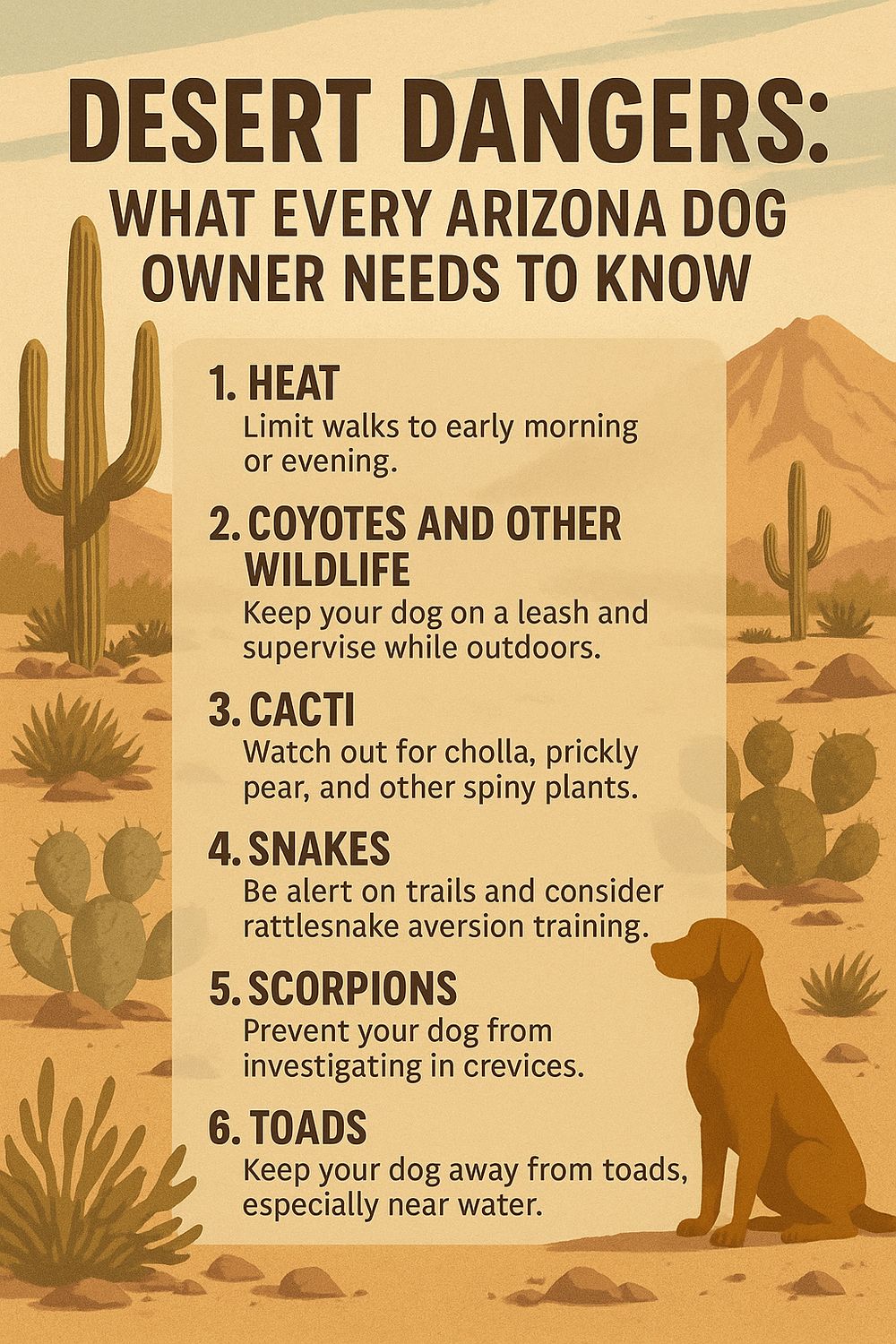
Living in Arizona means beautiful sunsets, warm winters, and endless outdoor adventures with your dog. But it also means sharing the land with hazards unique to the desert. From scorching pavement to prickly plants, the Grand Canyon State has plenty of hidden threats for our four-legged friends.
Here’s your essential guide to keeping your dog safe, healthy, and happy in Arizona’s desert environment.
☀ 1. Hot Pavement and Sidewalks
It’s not just the air temperature you need to worry about—pavement can get 40–60°F hotter than the surrounding air. At 100°F outside, asphalt can reach 150°F, burning paw pads in seconds.
Safety Tip:
- Use the 7-Second Rule: Place the back of your hand on the pavement for seven seconds. If it’s too hot for you, it’s too hot for your dog.
- Walk early in the morning or after sunset.
🌵 2. Cactus Thorns and Spines
From prickly pear to cholla, cacti are everywhere. Spines can embed in paws, noses, and mouths, causing pain and infection.
Safety Tip:
- Keep your dog on trails.
- Carry a comb or tweezers on hikes for quick removal.
- If your dog gets into a “jumping cholla,” stay calm—use pliers or a comb to dislodge the segment without touching it.
🐍 3. Rattlesnakes
Arizona has 13 species of rattlesnakes, and they’re active from spring through fall, especially at dawn and dusk.
Safety Tip:
- Avoid tall grass, rocky crevices, and thick brush.
- Consider rattlesnake aversion training.
- If bitten, seek emergency vet care immediately—do not try to suck out venom.
🦂 4. Scorpions and Spiders
Bark scorpions can cause severe pain and neurological symptoms in dogs. Black widows and brown recluse spiders are also present in Arizona.
Safety Tip:
- Keep your yard clear of debris where these critters hide.
- Check bedding, dog houses, and toys left outside before use.
💧 5. Dehydration and Heatstroke
Dogs don’t sweat like humans. In high heat, they can overheat quickly, leading to life-threatening heatstroke.
Warning Signs:
- Excessive panting
- Lethargy
- Vomiting
- Bright red gums
Safety Tip:
- Carry water on every walk or hike.
- Offer shade breaks often.
- Never leave your dog in a parked car—even for a minute.
🌾 6. Foxtails
These barbed grass seeds can burrow into your dog’s skin, ears, paws, or nose, causing infection or worse if not removed.
Safety Tip:
- Avoid areas with tall, dry grass.
- Inspect your dog after walks—especially paws and ears.
🪨 7. Rough Terrain and Sharp Rocks
Arizona’s trails can be rocky and uneven, leading to cuts or paw injuries.
Safety Tip:
- Use dog boots for rough hikes.
- Stick to well-worn paths.
🛡 8. Coyotes and Other Wildlife
Coyotes, bobcats, and even hawks can pose a risk to small dogs, especially in early morning or evening hours.
Safety Tip:
- Keep dogs on a leash at all times.
- Don’t let small dogs out unsupervised, especially at night.
❤️ Final Thoughts
Arizona’s desert is breathtaking—but it demands respect. By staying alert, preparing properly, and knowing what to watch for, you can give your dog the joy of desert adventures without the danger.
Your dog counts on you to be their protector—so pack the water, check the ground, and enjoy the beauty of Arizona safely.